
23 Jun Creatives, Life sciences and Tech pinpointed as West London’s growth sectors
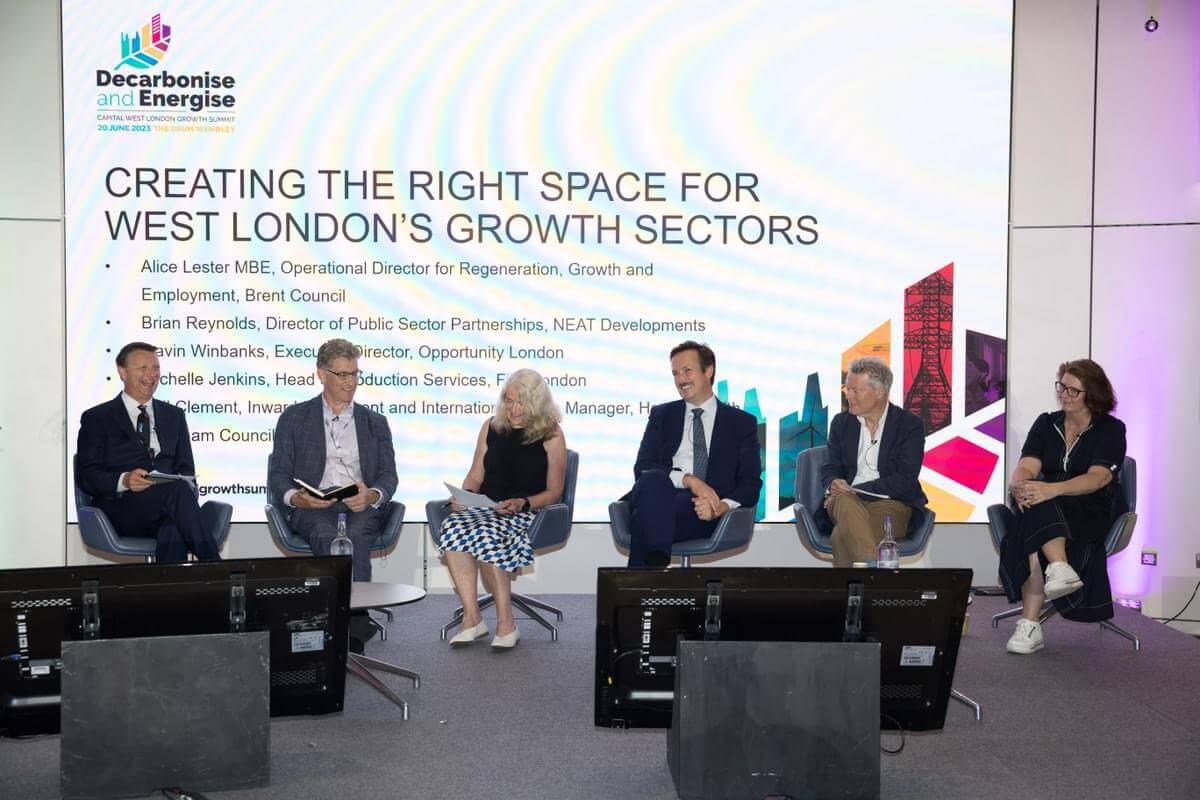
At the “Creating the right space for West London’s growth sectors” discussion at the Capital West London Conference 2023, delegates heard how West London acknowledges the importance of traditional business but also looks forward by identifying and supporting various growth sectors, focused on employment and diversifying the local economy.
The hospitality industry, wholesale and retail trade, logistics, transport, and storage are all traditional industries that have shown economic resilience over the past years. However, Alice Lester MBE, Operational Director for Regeneration, Growth and Employment at Brent Council said: “What’s important are the growing industries of the future that are expected to provide a big source of economic value and employment. Such as digital, tech, creative, and the green economy. It is really important to get involved with those industries at this stage to focus on access to quality employment and progression within those sectors.”
Alice said for local councils, the key priority was to have really strong senior political and managerial leadership and buy-in, also pointing out the need for a good policy context with clearly outlined frameworks, “which sounds out ambitions for growth, and makes it clear what councils want to achieve.”
She said: “The local authority has a role in setting out the circumstances which will enable good placemaking and investment.”
She also highlighted that creating a thriving community required creating a balanced mixed economy, stressing that, “it’s not just about creating the right places, It’s about relationships and working closely with businesses”. Brent is accomplishing this through employment events, programmes, business support and skills academies to boost growth sectors.
Life sciences, FinTech and cyber, as well as film are active priority growth sectors for Opportunity London, which aims to create dialogue between the public and private sectors to facilitate increased investment.
“We make sure what we’re taking to the international market is credible, to fast track the engagement between the investor and the people who are doing impactful things at a local level,” said Gavin Winbanks, Executive Director at Opportunity London.
With outstanding skills and capabilities throughout London, collectively, we have to do a better job of selling the opportunities to them. This is a, “remarkably complex mix,” working in partnership to aim internationally, while also ensuring the results contribute and create a financial impact towards the local community, especially by securing long-term institutional investors.
This year, Michelle Jenkins, Head of Production Services at Film London, observed lots of inward investment for big features and high-end TV productions. She noted, this could be because of the national tax breaks but also West London’s skills and expertise in terms of crew and staff.
Looking at ways this can be improved, she said, “I’m still looking for studio space in London because so much is converted warehouse space and not built for purpose,” she discussed the need for training in the region, “we’ve got a lot of courses on animation and VFX now. But, you can’t beat training on the job in our world.”
She commented that creating a cluster environment could be very beneficial for the sector, “More than any other industry in the world, time is money, and if you create an environment where all those facilities are nearby, then that’s ideal.”
Brian Reynolds, Director of Public Sector Partnerships at NEAT Developments, said: “Understand your locality, who’s already here, and how you can build on those.”
Talking to tenants has been a huge part of the process, “increasingly and suddenly, London land is in short supply, making everything very expensive. Intensifying the importance of getting more out of it, one reason why stacked industrial is becoming increasingly popular.”
He also emphasised the importance of diversifying into not widely discussed industries, even though the food and beverages industry is burgeoning and everybody wants biosciences, Brian said: “There really is a place for metal bashing and aggregates in some places, because all big cities need it. Even if nobody wants a waste transfer station, it has to go somewhere”.
Phil Clement, Inward Investment and Internationalisation Manager at Hammersmith and Fulham Council said the White City innovation district and Imperial College claim life sciences as a really big driver for the region, working on a cross-disciplinary level including drug discovery with the help of AI and new materials technology, which aim to create an impact on the global stage.
He said: “In terms of inward investment, I am trying to get more people to move into the local area. We’re noticing the demand to shape office space, but also retrofit it to put new labs in. Since lab space requires people to be physically present, it has been a key opportunity.”
With the UK HQ of ITV, Disney and The Royal College of Arts School of Communications, the creative industries make up an additional major sector. However, the emphasis remains on its interaction with technology, including animation and new technology in film and television production.
Phil said it was important to help the local community come along the journey. “When talking about upscaling in terms of high technology jobs, around life sciences, it’s not about getting PhDs in unique and wonderful subjects, it’s looking to see if we can bring on people from schools in the region who want to go into those technology industries, and help them see it as their future pathway.”