
02 Mar Health technology and green skills will propel West London’s sustainable economy
“Much more investment and coordination” could position West London as the “healthcare equivalent of Silicon Valley”.
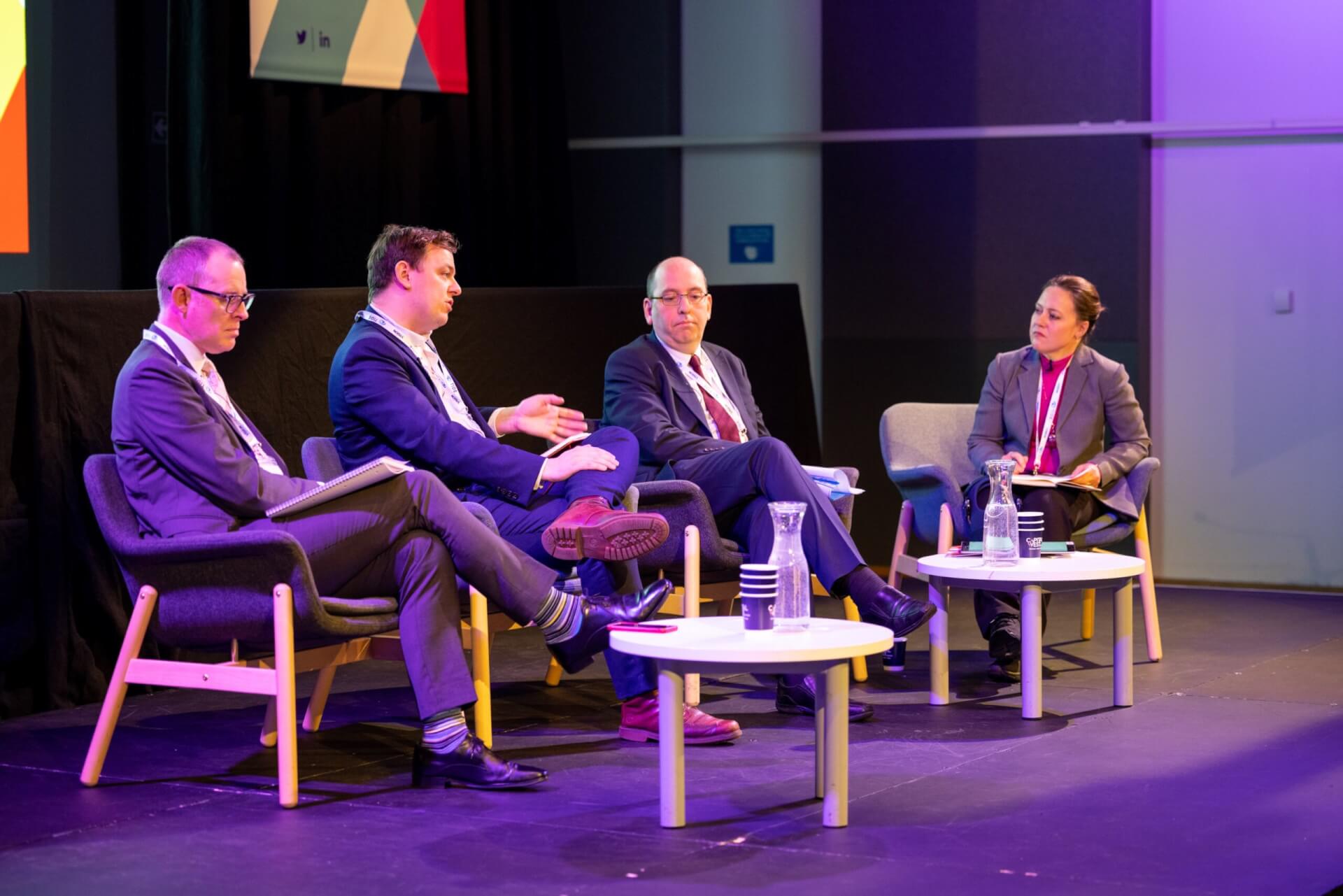
Jim Coleman, Director and Head of Economics at WSP, joined us for the Sustainable West London panel at the Capital West London Growth Summit. He discussed the economic opportunities of decarbonisation lay in creating new technologies, services and products.
“West London is in a fantastic position to do that because of the existing innovation capability here. The existing business base and the higher education institutions are fantastic and world-leading.”
However, the challenge arose from “commercialising ideas” and taking the products and services to a global market while “creating the depth of specialisation” for West London to become a global centre.
The health sector and its associated digitisation and technology was “a real strength” Jim Coleman said but needed “much more investment and coordination”.
“How do we then take those products and services into the global market, sell them internationally and embed the specialisation here so we become the healthcare equivalent of Silicon Valley? It’s the place in a world where these things happen”, he added.
A further challenge is the provision of skills for residents and the West London Green Skills Hub, part of the Mayor’s Academies Programme, launched in January, which is vital to addressing this.
David Warnes, Deputy Principal – Strategy, Planning and Communication, Ealing, Hammersmith and West London College, which leads the hub, said: “It focuses on key growth sectors, green skills being one of them but also hospitality, digital, creative health and care. It’s a way of bridging the divide between those that deliver skills and training – schools, colleges, universities, and training providers- and the needs of employers, making sure the supply of skills is meeting demand from employers. We’re delivering the right skills, at the right time, in the right place for those employers.”
A crucial strand of the hub is to make sure local people are getting local jobs.
David added: “If you take construction, for example, it’s fundamental to work with local authorities and the developers building the many, many homes in West London to make sure residents have access to those jobs and training, so it is very much around putting on programmes for residents to upskill and reskill in those sectors.”
Retrofitting is a key part of the green construction skillset and an ongoing project is taking place in Ealing.
Councillor Peter Mason, Leader of Ealing Council, said: “We’re making great strides in terms of retrofitting our buildings, pilot projects and council estates to bring energy-strong standards and we’re going to roll that out even further. We’re making sure that through Broadway Living, our wholly-owned council company, we’re building to Passive House standards [includes airtight construction and high-performance glazing].”
The rewilding of parks and public spaces – around 800,000 sq m – is also in progress in the borough and a net zero waste-to-landfill target almost achieved.
“Ealing has a huge ambition in terms of our climate crisis targets,” Councillor Mason said. “We set an ambition to be a carbon neutral borough, not just a carbon neutral council, by 2030. Now that’s a gargantuan task. That’s going to require everybody to contribute.”